Planning a trip to Rome can feel a little overwhelming! There’s so much to see, so much history, and not nearly enough time. I put together this 3 day Rome itinerary to try to help you plan your trip, based on my own experience visiting the city in the summer. It’s designed to help you see Rome’s most iconic sights without feeling completely rushed, while also leaving room to wander, have time to eat, and soak up the atmosphere.
This itinerary groups sights that are close together, prioritizes early mornings to help avoid crowds (especially in peak season), and includes suggestions on what’s worth booking in advance. I’ve intentionally not included specific times or set restaurant stops, so you can move through each day based on your own energy levels and choose where to eat depending on what looks good as you explore.
Whether this is your first time in Rome or you’re returning and want a well-balanced plan, this guide will walk you through exactly how to spend three unforgettable days in the Eternal City.
This itinerary is based on 3 full days in Rome. Ive been to Rome twice, once in June 2014 and once in July 2024!
Please know this website is reader supported and includes some affiliate links. I earn a small commission when you click on or purchase from affiliate links at no additional cost to you. Thank you for your support!!
3 Day Rome Itinerary
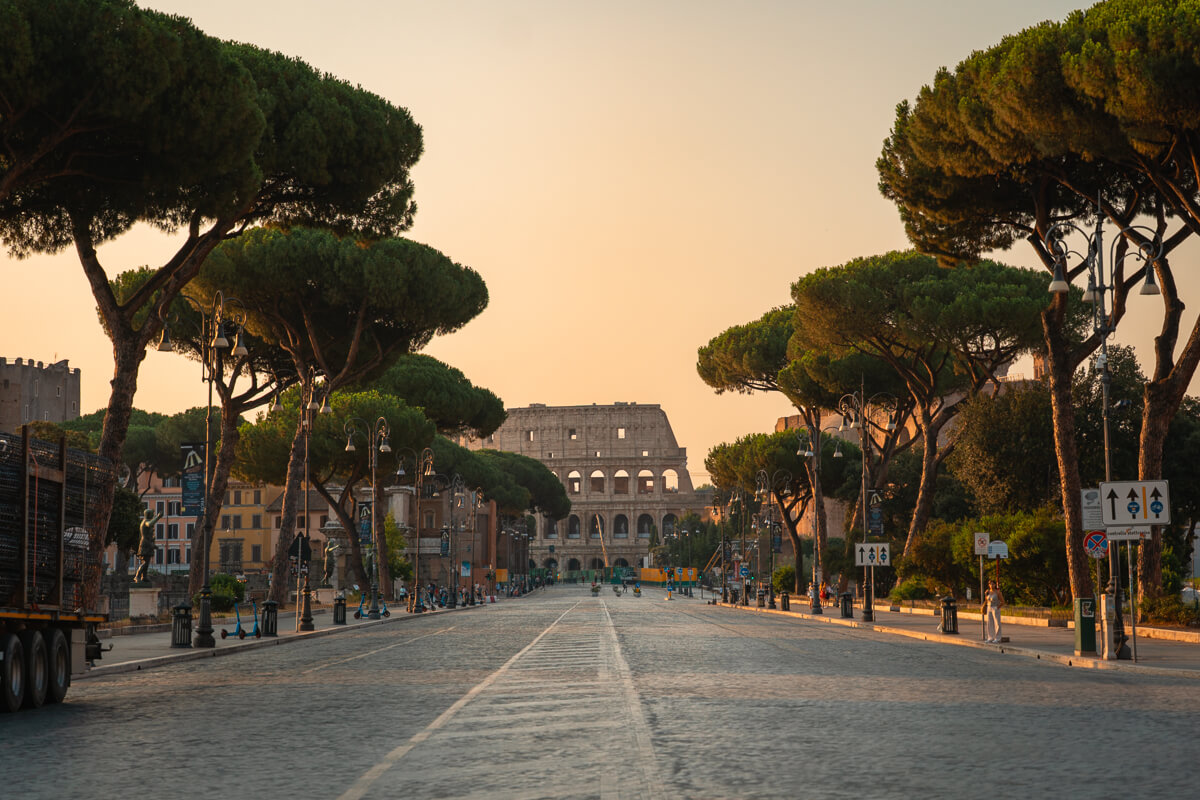
Day One – Colosseum, Roman Forum, Palatine Hill, Trastevere
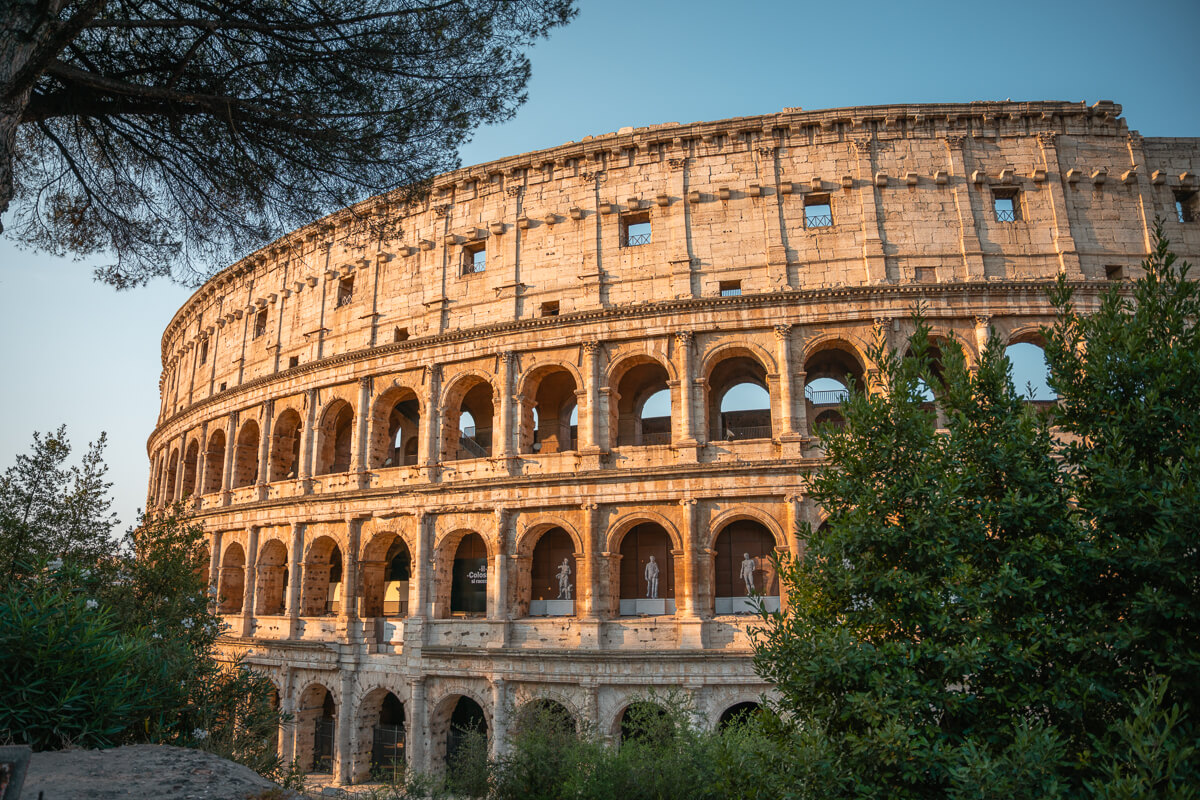
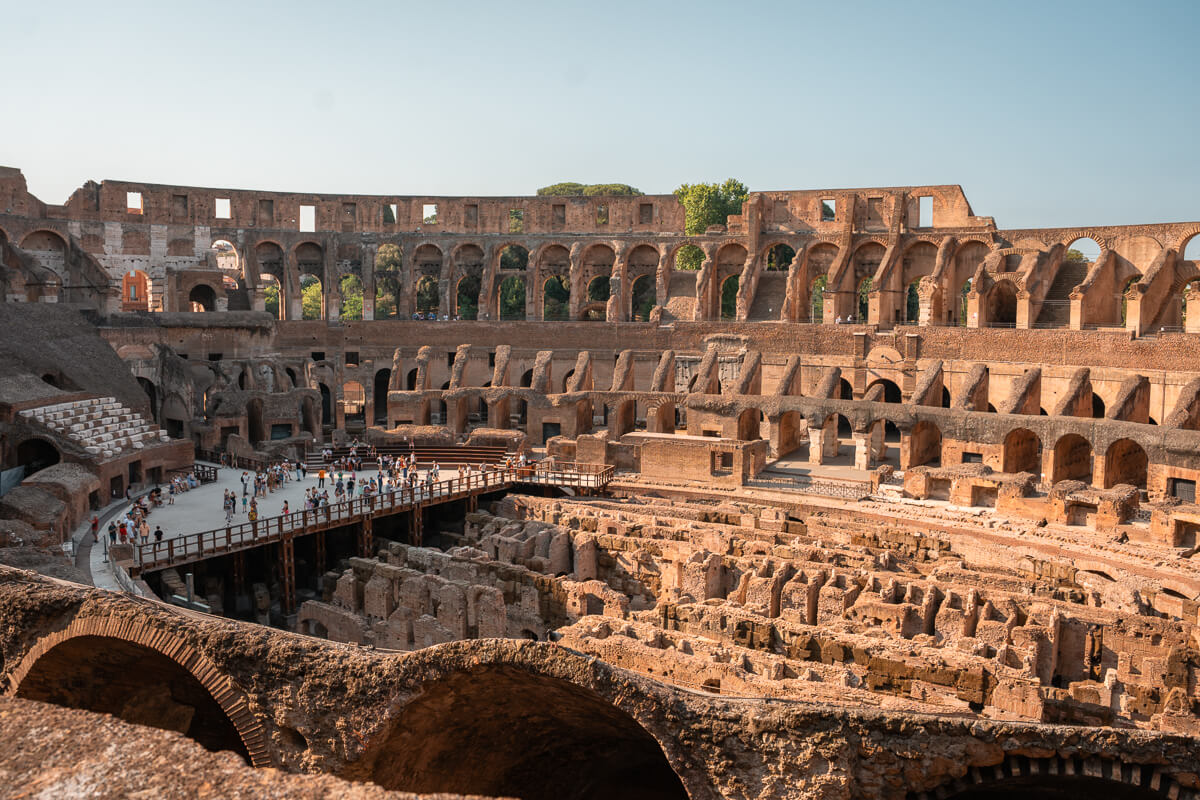

Colosseum
Visiting the Colosseum is one of the top things to do in Rome.
When I visited in the month of July, I booked the very first time slot at 8:30am hoping to beat the crowds, and even then there was already a line forming outside before the doors opened. Getting in early was so worth it though.
When we got in we went straight up the stairs and worked our way back down, and by the time we were leaving (around 10am) it was absolutely packed.


We didn’t end up booking a tour because we didn’t want to have to follow someone around and listen to it and to be held to someone else’s timeline to explore. We had previously downloaded Rick Steve’s Audio Guide if we wanted to listen to it, but we ended up just reading the plaques at our own pace. It’s up to you how you want to experience the Colosseum in Rome!
If you’re going, definitely book your tickets in advance and grab the earliest slot you can. It makes a huge difference! Also make sure to research the different options. There are certain spots you can only access with the proper ticket (the Attic, the Underground, and the Arena).
- Colosseum + Roman Forum Official Website
- Colosseum, Roman Forum & Palatine Hill Guided Tour (GetYourGuide)
- Rome: Colosseum Arena Floor, Palatine & Forum Guided Tour (GetYourGuide)
- Colosseum, Roman Forum & Palatine Hill with Audioguide App (GetYourGuide)
- Rome: Roman Forum and Colosseum Underground Exclusive Tour (GetYourGuide)


Roman Forum
Visiting the Roman Forum right after the Colosseum is such a great way to build your itinerary, because they are basically right beside each other.
One thing I loved is that the Forum feels a little more open and spread out, so even when it’s busy, you still have space to wander and explore without feeling totally jammed in.
There is also the option to join a tour if you want to have someone guide you through the history, but we enjoyed exploring at our own pace. If you don’t want to book a tour but still want extra context, an audio guide or a quick YouTube history video beforehand is a great alternative.
Palatine Hill
Palatine Hill is one of the most ancient parts of Rome and is considered the birthplace of the city. It’s where emperors and wealthy Romans once lived in massive palaces. After exploring the Roman Forum (or before!), you can head up the Hill to explore even more ruins and see pretty views from up there too!
Trastevere Neighborhood
This is a great place to spend the rest of your day, the Trastevere neighbourhood is a cute area with pretty buildings, great restaurants, and even a small botanical garden. As you wander around exploring you can also pop into any little shops that seem interesting!
If you’re interested, there are also food tours you can book while in Trastavere:
- Guided Food Walking Tour with Wine in Trastevere
- Trastevere & Campo de Fiori Street Food Walking Tour
Day Two – Trevi Fountain, Pantheon, Spanish Steps, Piazza Navona


Trevi Fountain
You can’t spend 3 days in Rome and not visit the Trevi Fountain!!
It was completed in the 1700s and designed in the Baroque style, built at the end point of an ancient Roman aqueduct that supplied water to the city for over 400 years. It is one of the prettiest fountains I’ve seen.
When we visited in July 2024, we got to the Trevi Fountain around 5am to try to avoid some of the crowds. There were still more people than I expected there at that time of day, but soooo much less crowded than later that afternoon! There were Police Officers there at that time of day as well, so even though it was still dark out at that point, it felt well protected.
I would highly recommend getting there as early as you can, because this seemed to be one of the most popular sites in Rome.


Pantheon
The Pantheon is nearly 2,000 years old and was originally built as a Roman temple before being turned into a church. It is one of the best-preserved ancient buildings in the whole city!
We went pretty early in the day, right after we were done at the Trevi Fountain (it’s only a 9 minute walk between them). If you want to try to get photos without people in them, the earlier you go the better.


If you want to go inside, there is a small cost for tourists. On the first Sunday of the month though it is free (but probably really busy!).
You can buy tickets on-site, online in advance through their official website, or book with a tour company online.
- Rome: Pantheon Priority Entry Tickets with Interactive App (4.7 Stars, 3,078 Reviews, GetYourGuide)
- Rome: Pantheon Fast-Track Ticket and Official Audioguide (4.4 Stars, 26,384 Reviews, GetYourGuide)
- Rome: Pantheon Timeless Marvel Guided Tour with Entry Ticket (4.9 Stars, 3,735 Reviews, GetYourGuide)

Piazza Navona
About 5 minutes away from the Pantheon is Piazza Novona, which is a long, picturesque square in Rome.
This is a great spot to stop and relax for a bit and take photos of Bernini’s famous Fountain of the Four Rivers and the architecture of the buildings surrounding the Piazza. Make sure to work this into your Rome itinerary!
Traditional Pizza Cooking Class near Piazza Navona

Spanish Steps
Built in the 1700s, the staircase was designed to connect the Spanish Embassy at the bottom with the Trinità dei Monti church at the top.
Since we started our day so early, it still wasn’t crazy busy by the time we got to the Spanish Steps.
You can’t sit on the steps anymore (you could get fined!), but it’s still fun to wander around, take a few photos, and enjoy the view from the top.
It’s not a spot you need a tour for, it’s just a quick stop that’s easy to work into your second day in Rome. If you want a calmer experience, go first thing in the morning or closer to sunset when the crowds thin out a bit and the light is extra pretty.
Pasta & Tiramisu Cooking Class near the Spanish Steps

Other Things to do on Day 2 in Rome
Depending on how fast you see everything and how early you start, you might still have a lot more time in your day to fill. Based on your interests, you can choose what to do next!
Other things you can do to fill your day in Rome include:
- Piazza del Popolo and Piazzale Napoleone I
- Altar of the Fatherland (Altare della Patria)
- Castel Sant’Angelo (Entry Ticket & Digital Audioguide)
- Osteria da Fortunata (lunch or dinner, just make sure to book in advance!)
- Grab Gelato
- Check out the McDonalds by the Spanish Steps (it is one of the prettiest McDonalds!)
Tours/Fun Attractions you could check out:
- Street Food Tour with Local Guide
- Pasta Making Class with Wine, Limoncello, and Dessert
- Big Bus Hop-on, Hop-off Open-Top Sightseeing Tour (would be able to take you to a lot of the places listed in this itinerary!)
Day Three – Vatican City + St Peter’s Basilica

Vatican City + Vatican Museums
Visiting Vatican City and the Vatican Museums is one of the best things to do in Rome. The Vatican is its own tiny country inside Rome, and the museums are absolutely massive. To make sure you don’t feel rushed, I would recommend planning the whole day to explore the Vatican area and take everything in.
Even though I’ve explored the Vatican now, it is so beautiful I would definitely go back if I were to visit Rome again! The Sistine Chapel is also in the Vatican Museum, just be sure to bring something to cover your shoulders and knees so you won’t be denied going in. When I went in July, I had a light weight scarf tied around my bag and wore it over my shoulders when I needed to, and wore a lightweight maxi dress so my knees were covered. Both genders need to follow the dress code!


If you want to visit the Vatican Museums, I would highly highly highly recommend booking your tickets in advance online. The line to get in without tickets was soooo long, and in the summer it would’ve been so hot standing in the heat just to wait to get inside. Booking your ticket online for a certain entrance time will be a lot more efficient and let you have time to see even more of the museum or Rome itself.
You can purchase an audio guide or book a tour to be led around, so make sure to plan in advance and buy the right ticket depending on how you want to visit. For us, we didn’t book a tour and instead downloaded Rick Steve’s podcast guide so we could explore at our own pace and take as many photos as we want, not being tied to the flow of a guided tour!
- Vatican Museum Official Website
- Vatican Museums, Sistine Chapel & St. Peter’s Basilica Tour
- Vatican: Museums & Sistine Chapel Entrance Ticket
- Rome: Vatican Museums, Sistine Chapel & Basilica Tour


Pasta & Tiramisu Class with Fine Wine by the Vatican

St Peter’s Basilica
Once you’re done at the museum, you can head over to St Peter’s Basilica. Unfortunately, we ran out of time to visit here! It will definitely be on my list next time I visit Rome.
Entrance to the basilica itself is free, but you have to pay to climb the Dome. To get inside you’ll also have to go through security, and that line can get really long as the day goes on. Once you’re inside, you can walk around at your own pace. If you reserve a time slot in advance on their website, there is a small fee, but it allows you to not have to wait in line when you visit and a digital audio guide is included with your visit.
If you have the energy, climbing to the top of the dome seems worth it. The views over St. Peter’s Square look incredible from what I see in photos!
You’ll need to dress properly to enter the Basilica too, so make sure your knees and shoulders are covered.
Tickets to St Peter’s Basilica is free, but you can reserve a spot through their website for a fee or purchase tickets to climb the Dome.


My Rome Favourites
Best Gelato: Gelateria Artigianale Il Capriccio di Carla
Best Pasta: Trattoria Vecchia Roma (make reservations in advance!)
Where I stayed: Casa Cleo
Top 3 sites: Colosseum (first thing in the morning), Vatican City, Pantheon

Best Time to Visit Rome
- Spring (April–May): One of the best times to visit Rome. The weather is mild, flowers are blooming, and it’s comfortable for walking around all day. Crowds start to pick up closer to May, but it’s still much more enjoyable than peak summer.
- Summer (June–August): The busiest and hottest time to visit. July and August are super hot and huge crowds, especially at major sights like the Colosseum, Vatican Museums, and the Trevi Fountain. If you visit in summer, plan early mornings, lots of breaks, and book everything in advance. When we visited in July, we would start super early in the morning, take an afternoon break in the hotel (make sure you try to book one with a/c!) and then we would head back out in the late afternoon.
- Fall (September–October): A great time to visit. The weather cools down, the summer crowds slowly fade, and the city feels more relaxed while still being lively. It’s perfect for sightseeing, long walks, and enjoying outdoor cafés. Next time I visit Rome I hope to do it in the Fall!
- Winter (November–March): The quietest time to visit Rome. While it can be cooler and occasionally rainy, crowds are much smaller and prices are often lower. December has Christmas decorations, and January–February are great if you want to see the sights without the crowds.

Where to Stay in Rome
There are a ton of places to stay in Rome! I would recommend choosing a place that fits your budget, while considering the area it’s in for easy access to sites you want to see. If you’re visiting in the Summer, try your hardest to find a place to stay with a/c, you won’t regret it!!
- Casa Cleo: 21 minute walk to Trevi Fountain, 14 minute walk to Colosseum, a/c. This is where we stayed! ($$)
- Comics Guesthouse Hostel: 31 minute walk to Trevi Fountain, 50 minute walk to Colosseum, a/c ($)
- Trastevere House B&B: 30 minute walk to Trevi Fountain, 33 minute walk to Colosseum, a/c ($$$)
- Hotel Eden Rome: 13 minute walk to Trevi Fountain, 31 minute walk to Colosseum, 10 minute walk to the Spanish Steps, a/c ($$$)

How to Get to Rome
Florence to Rome
Getting from Florence to Rome is pretty easy and straightforward. The easiest way to get there is by taking the train, which takes about 1.5 hours. The trains are clean and comfortable, and most options take you straight from city center to city center. You can book your ticket in advance on TrenItalia!
If you’re looking to expand your Italy itinerary, you can also plan to stay at some smaller towns on the way. In our itinerary, after Florence we spent 1 day in Siena (2 nights) and 1 day in Orvieto (2 nights), before arriving in Rome.
Another option to consider is taking the FlixBus or Itabus from Florence to Rome. It is usually cheaper, but will take around 3.5 hours instead. I personally haven’t taken either of these busses before, but I have seen FlixBus around as I travelled through Europe!
I booked my Italy train tickets in advance directly through TrenItalia.
Leonardo da Vinci Rome Fiumicino Airport to Rome
Most international flights arrive at Leonardo da Vinci Fiumicino Airport (FCO), which is Rome’s main airport and about 30–40 minutes from the city centre.
Once you land, getting into the city is simple. The Leonardo Express train is the most popular option. it runs directly from FCO to Roma Termini in about 30 minutes and doesn’t make any stops.
If you’re flying in during peak season, expect lines at immigration and baggage claim, especially in the morning. Giving yourself a bit of buffer time so you’re not stressed and make the arrival process much smoother and less stressful.
The Leonardo Express trains run so often, I booked my ticket at the train station when I was ready to take the train, to make sure I didn’t accidentally miss my train and so I could stress less! This is the one thing we didn’t prebook, haha.

Map of Rome
Use this map to find other things to see and do each day, in case you have some spare time to fill! There are also some restaurants in different areas you can try if you’re interested, but there are so many great restaurants in Rome depending on what you like.
This map has everything mentioned in the post, plus a few extra spots. I haven’t visited everything on this map, but they’re all on my Rome bucketlist!

3 Days in Rome Summary
This 3 day Rome itinerary is meant to give you a solid framework while still leaving room to slow down, wander, and experience the city in your own way. Start early when you can, book tickets for your must-see spots in advance, and don’t stress if things don’t go exactly to plan.
If you’re continuing your travels through Italy, make sure to check out Orvieto, Siena, or Florence too! I hope this helps in your planning and you have a great trip!
Plan Your Europe Trip
✨ Find tours and attraction tickets with GetYourGuide or Viator
🚗 Needing to rent a car? Check out rates with Discover Cars
🏩 Find hostels at Hostelworld.com
🏨 Search for your hotel with Booking.com
📱 Check eSim rates with Airalo
☀️ Save This Post!

Find me on: Instagram | Pinterest | Youtube


Hey! I’m Kat. Based in Alberta, Canada and just 4 hours from the Canadian Rocky Mountains, I love to travel to Banff and Jasper frequently and also explore new places around the world. Follow along for my tips based on my real adventures!